

Moisture vs Hydration: The Science Behind Healthy Natural Hair
If your hair feels dry no matter how many products you use, you're not alone. You moisturize religiously. You deep condition. You seal with oils. Yet by day two, your hair feels like straw again.
Here's the truth: You're probably not moisturizing—you're just making your hair wet.
Understanding the difference between moisture and hydration is the key to finally breaking the cycle of chronic dryness.
Hydration vs Moisture: What's the Difference?
Most people use these terms interchangeably—but they're not the same thing.
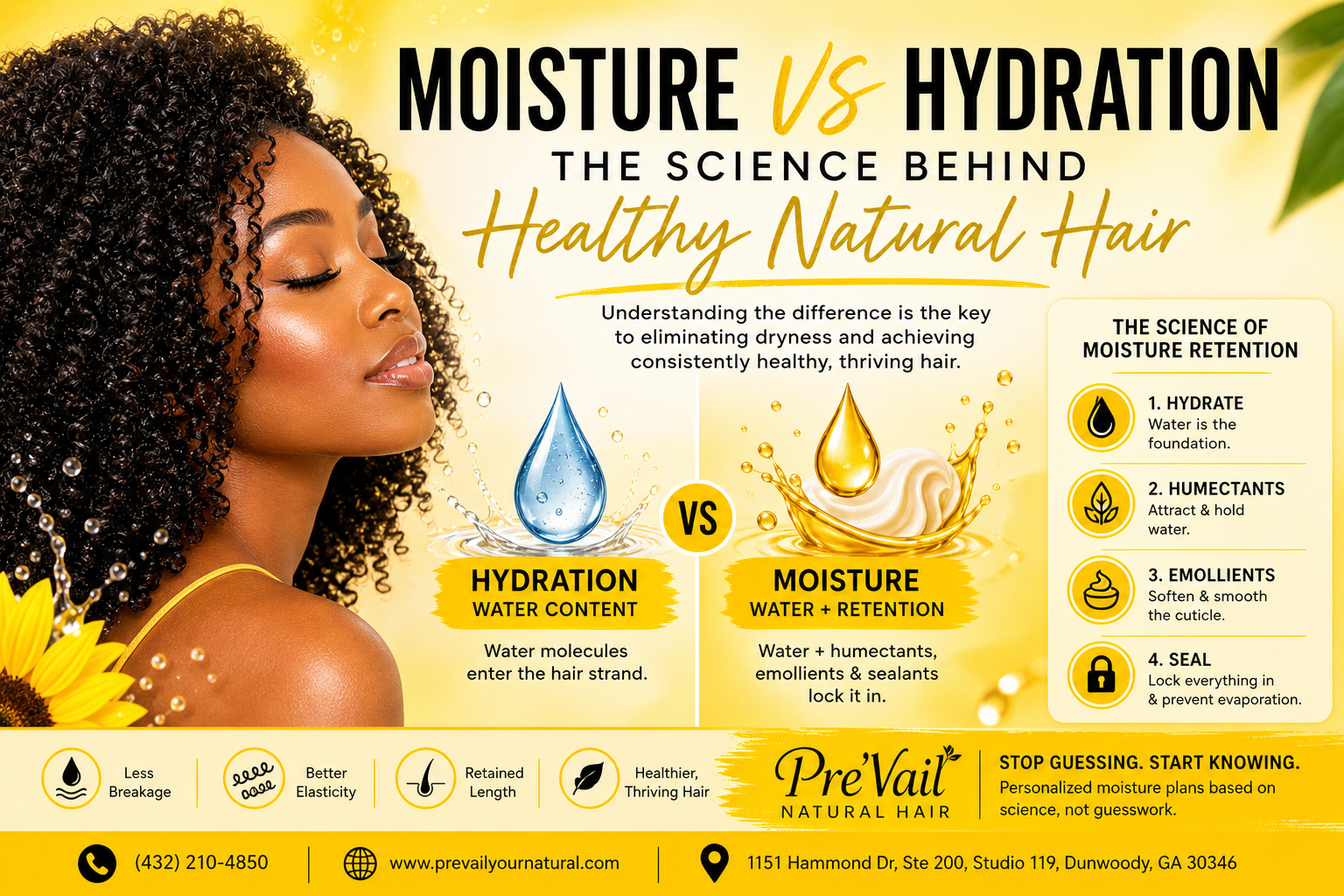
Hydration is water content. It's the presence of water molecules inside the hair strand. When you spray your hair with water, you're hydrating it.
Moisture is water plus the ability to retain it. Moisture involves water combined with humectants (attract water), emollients (soften), and sealants (lock everything in).
The critical part: Without hydration, moisture cannot bond to the strand. You need water first. But water alone evaporates quickly, which is why your hair feels great when wet but dry within hours.
Think of it like this: Hydration is drinking water. Moisture is drinking water and helping your body retain it.
Why Natural Hair Dries Out Faster
Natural hair—especially tightly coiled textures (4a, 4b, 4c)—faces unique challenges.
Sebum Distribution is Harder: Your scalp produces natural oils that should travel down the hair shaft. But the tighter your curl pattern, the harder it is for oils to make that journey.
Higher Shrinkage = Higher Dehydration Risk: Hair with high shrinkage (70%+) contracts significantly when it dries, squeezing out moisture.
Environmental Factors Hit Harder: Natural textures have more surface area exposed to dry air, wind, heating, and sun—all of which pull moisture out faster.
Product Mistakes Block Moisture: Heavy proteins, silicones, or mineral oils can coat the strand and prevent water from penetrating, locking moisture out instead of in.
The Science of Moisture Retention
Step 1: Hydrate First
You must introduce water to the strand before anything else. This is why the LOC method (Liquid, Oil, Cream) starts with liquid—usually water or a water-based leave-in conditioner.
If you skip this step and go straight to creams or oils on dry hair, you're just coating the outside with no moisture to seal in.
Step 2: Add Humectants
Humectants attract and hold water molecules. Common ones include glycerin, honey, aloe vera, and hyaluronic acid.
These pull moisture from the air into your hair. But in very dry climates (low humidity), humectants can pull moisture out of your hair instead. This is why your routine might work in summer but fail in winter.
Step 3: Add Emollients
Emollients soften the hair and smooth the cuticle. Common ones include shea butter, coconut oil, jojoba oil, and mango butter.
They fill gaps in the cuticle and create a smoother surface, preventing moisture loss.
Step 4: Seal with the Right Oils
Sealants lock everything in—the final protective layer that prevents water from evaporating.
Choose oils based on your porosity:
Low porosity: Use lighter oils (argan, grapeseed, sweet almond)
High porosity: Use heavier oils (castor, avocado, shea butter)
Common Moisture Mistakes
Mistake 1: Using Products on Dry Hair
If you're applying creams and oils to bone-dry hair, they're just sitting on top.
Fix: Always dampen your hair with water first.
Mistake 2: Over-Using Protein
Too much protein makes hair stiff, brittle, and unable to absorb moisture.
Fix: Do moisture-only deep conditioning. Avoid protein-heavy products for 2-4 weeks.
Mistake 3: Ignoring Porosity
Your hair's porosity determines which products work for you.
Low porosity: Needs heat to open cuticle. Use lightweight products.
High porosity: Absorbs moisture quickly but loses it fast. Needs heavier products.
Fix: Determine your porosity and adjust products accordingly.
Mistake 4: Not Drinking Enough Water
External moisture means nothing if you're dehydrated internally.
Fix: Drink at least 8 glasses of water daily. Internal hydration supports external hair health.
How to Build a Moisture Routine
Daily/Every Other Day:
Dampen hair with water
Apply leave-in conditioner (humectants)
Apply cream or butter (emollients)
Seal with light oil (sealant)
weekly
Deep condition with moisture-focused treatment
Use steam or warm towel to help penetration
Rinse with cool water to close cuticle
Apply leave-in, cream, and oil while damp
As Needed:
Refresh mid-week with water and leave-in
Adjust based on season (more moisture in winter, lighter in summer)
Monitor how your hair responds
The TrichoRx™ Approach to Moisture
At Pre'Vail Natural Hair, we don't guess about moisture—we assess.
During Strand Behavior Mapping™, we evaluate your shrinkage percentage, elasticity, and porosity to understand exactly how your hair absorbs and retains moisture. Then we create a customized moisture protocol as part of your Hair Health Blueprint™.
Generic moisture routines don't work. Your hair's porosity, shrinkage, lifestyle, and environment all determine what your routine should look like.
When you understand the science and your hair's unique behavior, you stop wasting money on products that were never designed for you.
Ready to End the Dryness Cycle?
If you're tired of dry hair that won't cooperate, it's time to stop guessing and start knowing.
At Pre'Vail, we assess your hair scientifically, identify the root cause of your dryness, and create a personalized moisture plan that actually works.
Click Here to Book your consultation today:
📞 (432) 210-4850
🌐 www.prevailyournatural.com
📍 1151 Hammond Dr, Ste 200, Studio 119, Dunwoody, GA 30346
