

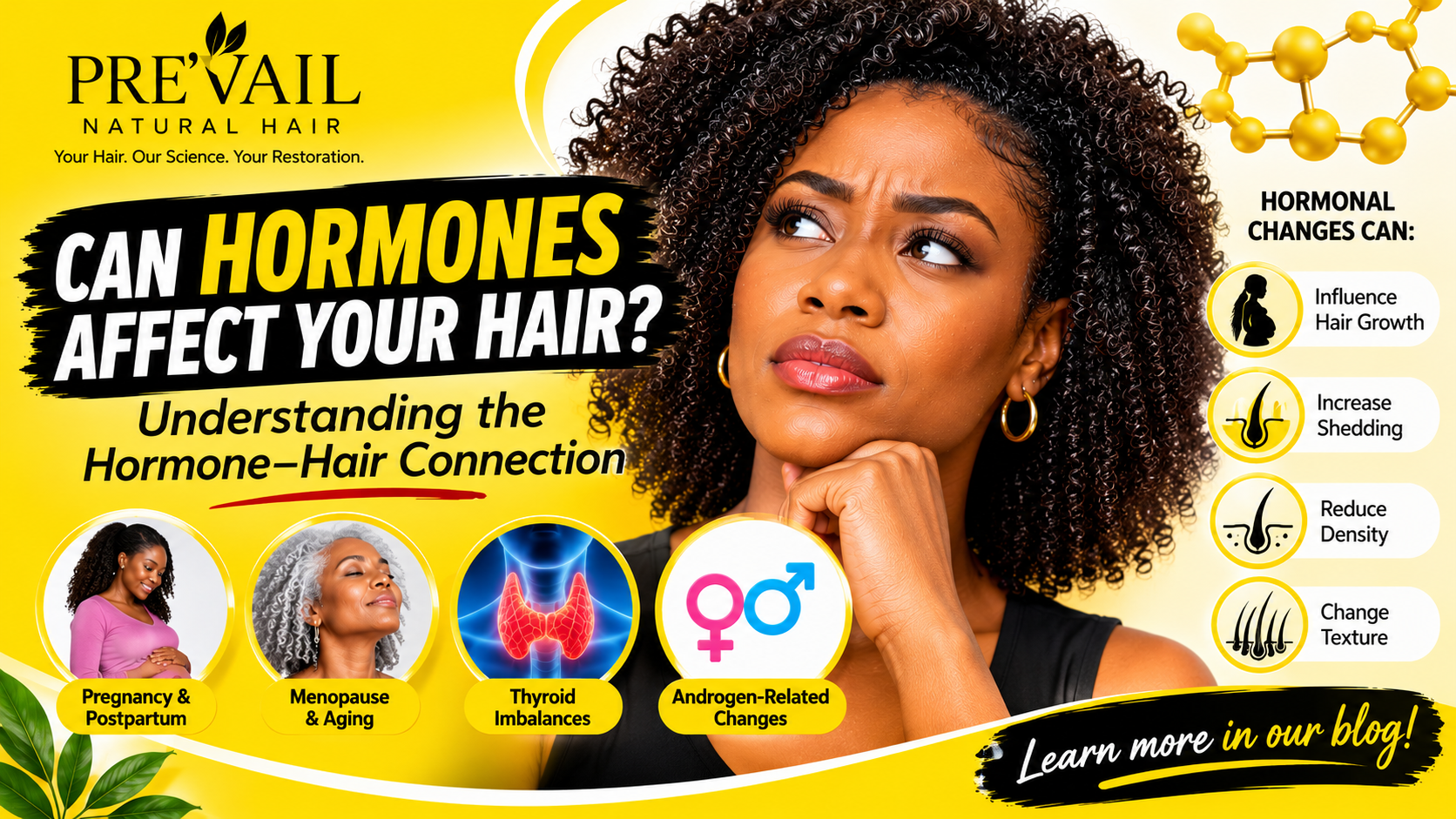
Have you noticed your hair becoming thinner, shedding more than usual, or changing in texture without any obvious explanation?
Sometimes, the answer may be connected to something happening inside your body: your hormones.
Hormones are chemical messengers that regulate many bodily functions, including aspects of the hair growth cycle. When hormone levels fluctuate, your hair may respond in ways you can see and feel.
How Do Hormones Affect Hair Growth?
Hair follicles are influenced by several hormones. These chemical messengers can affect how long hair remains in its growth phase, how follicles function, and how individual strands develop.
When hormonal balance changes, some people experience increased shedding, reduced density, or changes in hair thickness.
4 Ways Hormonal Changes Can Affect Your Hair
1. Pregnancy and Postpartum Changes
During pregnancy, hormonal changes can keep more hair follicles in their growth phase, making hair appear fuller.
After childbirth, hormone levels shift, and many women experience increased shedding. This is commonly known as postpartum hair shedding. It is usually temporary, although persistent or severe hair loss deserves evaluation.
2. Menopause and Aging
Changes in estrogen and other hormones during menopause can influence hair density and strand characteristics. Some women notice finer hair, reduced fullness, or increased visibility of the scalp.
3. Thyroid Imbalances
Thyroid hormones help regulate metabolism and several processes involved in normal hair growth. Both an underactive and overactive thyroid can be associated with hair thinning or increased shedding.
4. Androgen-Related Hair Changes
Androgens are hormones that can influence hair follicles. In genetically susceptible individuals, sensitivity to certain androgens can contribute to progressive follicle miniaturization and pattern hair loss.
Conditions involving hormonal imbalances, such as polycystic ovary syndrome (PCOS), may also be associated with changes in hair growth.
Signs Your Hair Changes May Be Hormone-Related
Some changes worth paying attention to include:
Increased or persistent hair shedding.
Gradual thinning around the crown or temples.
A widening hair part.
Reduced overall hair density.
Changes in strand thickness or fullness.
These signs do not automatically mean hormones are responsible. Genetics, nutritional deficiencies, stress, medications, and scalp conditions can produce similar changes.
Why Understanding the Cause Matters
When hormones are contributing to hair changes, simply switching shampoos or adding another growth oil may not address the underlying issue.
Understanding the possible cause is an important first step.
At Pre’Vail Natural Hair, professional hair and scalp analysis can help examine changes in scalp condition, hair density, and strand characteristics. When findings suggest a possible underlying medical or hormonal concern, further evaluation by an appropriate healthcare professional may be necessary.
Your Hair May Be Telling You Something
Hair changes are not always just about the products you use or how you style your hair. Sometimes, they reflect changes happening within your body.
If you've noticed persistent shedding, thinning, or changes in your hair's fullness, don't ignore them.
Understand what's happening. Look deeper. Take the next step toward restoration.
Pre’Vail Natural Hair — Your Hair. Our Science. Your Restoration.
📞 (432) 210-4850
🌐 www.prevailyournatural.com
📍 1151 Hammond Dr, Ste 200, Dunwoody, GA
